And coming soon… big news about my new book Bending the Bars
Hi friends,
There is a lot happening in the world of justice, so let me get right to it.
First, in the bizarre world of the death penalty.
Christa Pike survived not one, but two, doses of a lethal injection drug during a botched execution in Tennessee last week. She was rushed to the hospital in critical condition but has since regained consciousness and is speaking. The head of the Tennessee Department of Correction has resigned, with the ignominious distinction of having overseen a previous botched execution earlier this year. Tennessee Governor Bill Lee has now suspended executions for the remainder of the year and ordered an independent review. I’ve got one message for Governor Lee: Tennessee should ban the death penalty, and join 23 other states, the District of Columbia, and much of the developed world in abolishing capital punishment once and for all.

In the meantime, President Trump has approved the December 3rd execution by firing squad of Nidal Hasan, who was convicted of the notorious 2009 Fort Hood shooting in which 13 people were murdered. If carried out, it will be the first U.S. military execution since 1961, and the first by military firing squad since 1945.
Second, in the world of exonerations and junk science.
There were a number of exonerations last month. I’m going to talk about just one. In Georgia, Sheila Denton was finally cleared of murder more than 20 years after her arrest, after the bite mark evidence used against her was exposed as junk science.

Here’s the thing about expert testimony that claims to match a bite mark to an individual’s teeth: it’s nonsense. Human skin is elastic and changes with movement, swelling, and healing, so it does not preserve a stable impression of someone’s teeth. Science has never supported the basic assumptions behind bite mark matching that people’s dental patterns are sufficiently unique or that those patterns can be reliably transferred to and identified on human skin. Sometimes the supposed “bite mark” isn’t even a human bite mark at all!
Yet this kind of testimony was presented to juries as science. The consequences have been devastating; bite mark evidence has contributed to at least 34 wrongful convictions. Junk science has no place in a court of law.
Finally, some things I’m excited about.
Two recent conversations on Just Justice have stayed with me. Both focus not simply on what is wrong with our criminal legal system, but on what we can do differently.
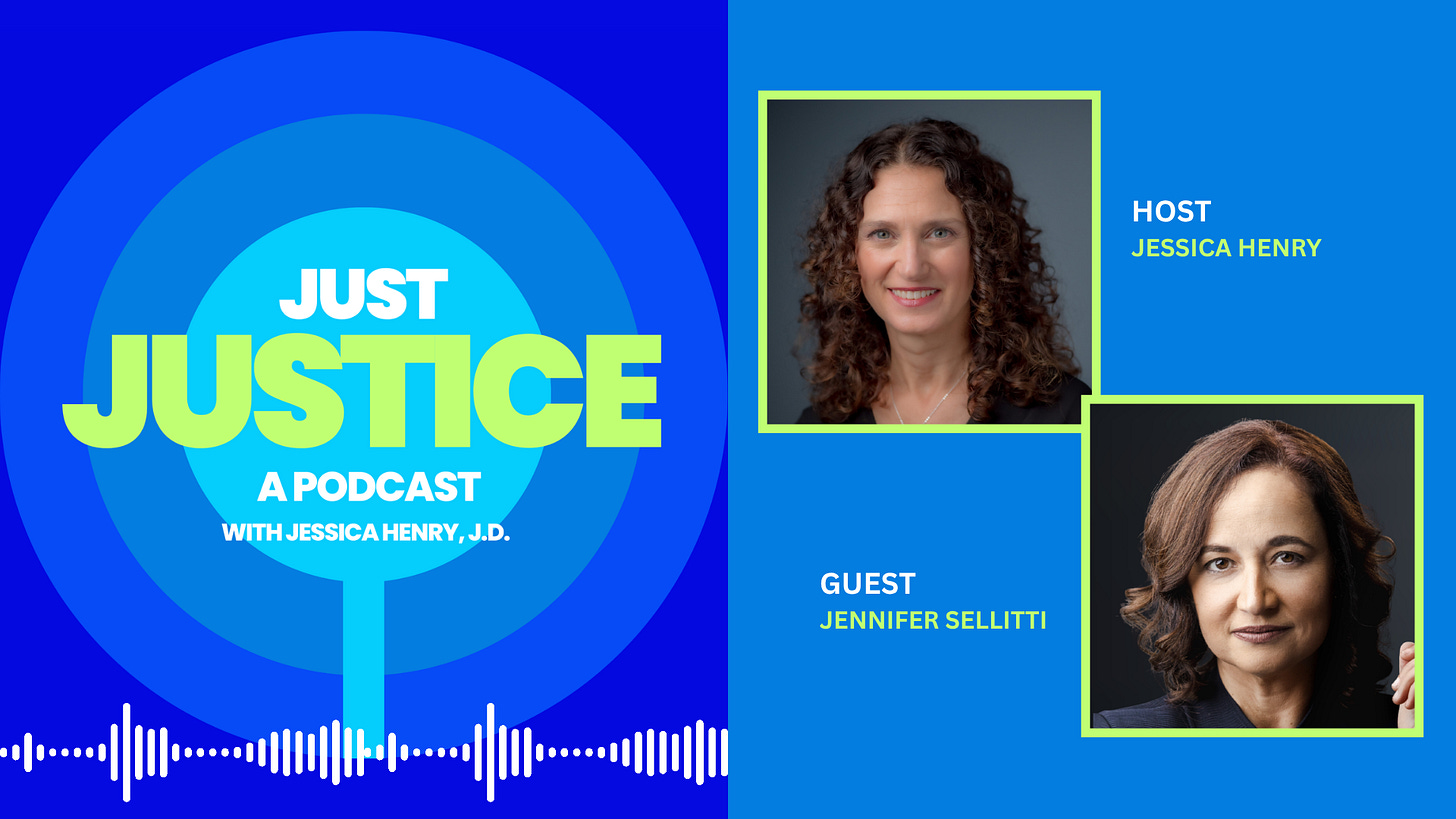
New Jersey Public Defender Jennifer Sellitti is working to expand holistic defense in New Jersey, extending services beyond criminal charges to address underlying issues — housing, mental health, addiction — that may have contributed to someone’s involvement in the criminal legal system in the first place. As she likes to say, holistic defense could put the public defender’s office out of business.
Elizabeth Vartkessian, author of the powerful book The Deserving, has spent years as a mitigation specialist calling for mercy, compassion, and second chances for those who are often the most damaged and vilified among us. She provides context and a path forward for people and shows that we are all more than the worst thing we have ever done. (Episode to be released on Tuesday, October 13th).
I also want to take a moment to introduce you to a new organization: the Beyond Prisons Coalition of New Jersey, a diverse, nonpartisan alliance of advocates, justice-impacted leaders, researchers, faith leaders and community organizations working to transform New Jersey’s criminal legal system. Contact them to learn how you can get involved in Jersey-style criminal justice reform.
I’m equally excited about work happening even farther upstream, before someone ever enters the criminal legal system. I want to highlight the efforts of two organizations that I support who help lift-up families and communities in ways that society often fails to do.
The Literacy Academy Collective created the South Bronx Literacy Academy, the first district public school in the nation specifically designed to support public school students with dyslexia and others who struggle with reading. They recently opened a second location in Brooklyn. These students may come from under-resourced communities and have too often been brushed aside, allowed to struggle, or made to believe they are not smart or capable. When learning disabilities go unidentified or unsupported, the consequences can ripple outward, from school failure and disengagement to, for some children, involvement in the criminal legal system.
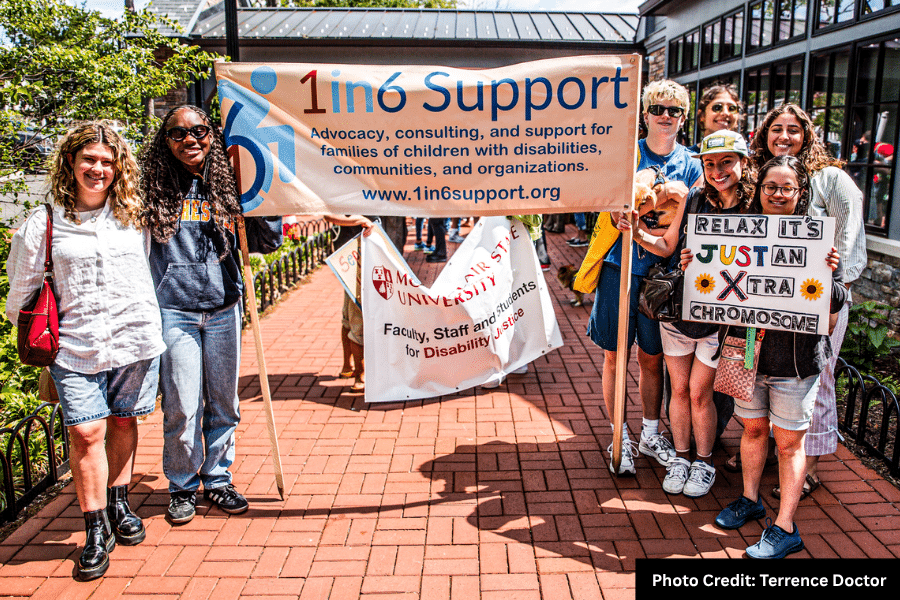
1in6 Support provides support to families raising children with disabilities. Parents and caregivers can feel overwhelmed, unseen, and unsupported, and when families who need help are left largely on their own, those stresses can ripple throughout entire families and communities. 1in6 Support aims to lighten that load by helping families in ways that matter.
None of this work generates the kinds of headlines that a botched execution or an exoneration does. But it is vital to building a more humane and effective system, supporting people and communities, and even preventing crisis or legal involvement in the first place.
That’s the kind of work I’m excited to highlight.
I’ll be back next week with some big news about my new book, Bending the Bars. I can’t wait to share it with you!
Thanks, as always for all you do.
— Jessica