What her conviction tells us about women, no-crime wrongful convictions, and junk science
Carmen Mejia spent 22 years in a Texas prison for killing a baby.
The problem is that no crime ever happened.
In January, the highest court in Texas finally declared Ms. Mejia to be actually innocent. She was released last week.
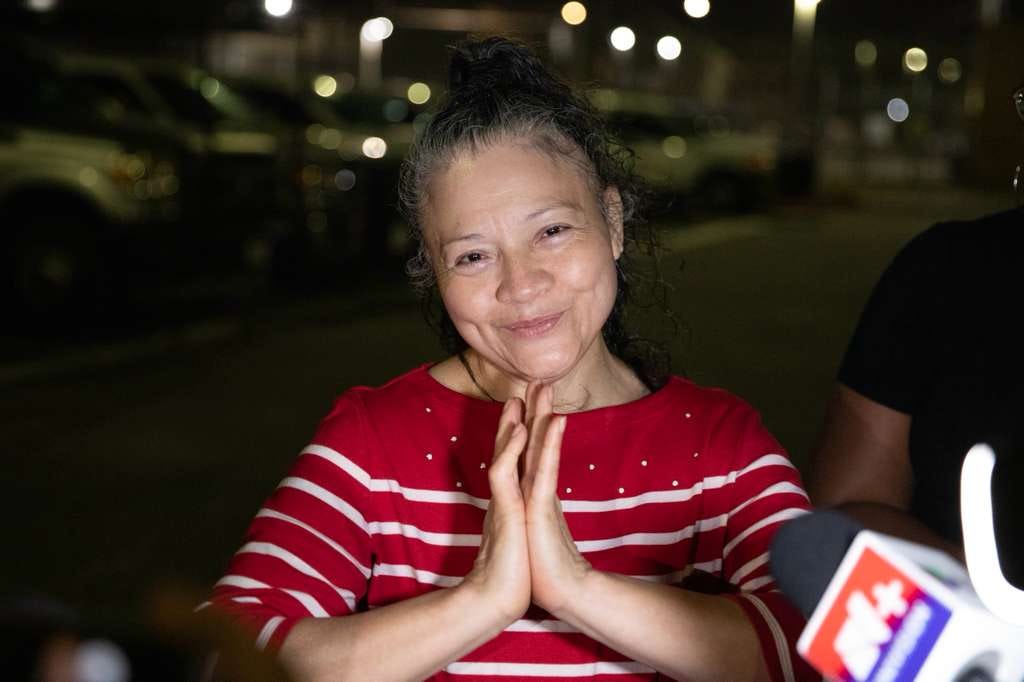
Over her 22-year incarceration, the case against Ms. Mejia crumbled. The original medical examiner reversed her finding that the death was a homicide to an accidental death. The prosecution’s experts recanted their testimony.
What they now know is what Ms. Mejia had said all along. The child had tragically but accidentally died after being scalded by scorching bathwater, caused by a rental home water heater that lacked a safety valve. There had been no murder at all.
Cases like Mejia’s are known as no-crime wrongful convictions, in which someone is convicted even though no crime ever happened. Within the world of wrongful convictions, no-crime cases are not rare. Data from the National Registry of Exonerations reveals that nearly 40 percent of all known exonerations involve convictions for crimes that never actually happened. When we look specifically at women, the pattern becomes even more striking. Nearly three quarters of all female exonerees were wrongly convicted where no crime ever happened in the first place.
I have spent years researching no-crime wrongful convictions, work that resulted in my book Smoke but No Fire: Convicting the Innocent of Crimes that Never Happened (University of California Press, 2020). I have also written about the particular dynamics that lead to wrongful convictions of women in these cases.
Which is why Carmen Mejia’s exoneration immediately caught my attention. Her case follows a pattern that is far too common for women who are later exonerated after serving years, sometimes decades, in prison for a crime that had never happened.
The Case*
*Most of the factual information here comes from the Innocence Project, who represented Ms. Mejia, unless otherwise noted.
On July 28, 2003, Carmen Mejia was at home in Austin, Texas with her own four children and a baby she was watching for a neighbor. She was nursing her youngest child when her eldest daughter tried to give the neighbor’s baby a bath. The tap water reached 147 degrees. The baby suffered third degree burns and died that day.
Mejia cooperated with investigators. Her children were interviewed on video and corroborated her account. She had no criminal history and no record of violence.
Police arrested her for murder anyway.
Her children’s recorded statements clearly stating that she was not responsible disappeared from law enforcement custody before trial. No burn expert testified for the defense. The prosecution’s expert assured the jury that the injuries could only have resulted from an adult deliberately holding a child in scalding water.
Mejia was convicted and sentenced to life in prison.
A Familiar Pattern
When a child dies, it is a tragedy. It can also quickly be mislabeled a crime.
In many cases investigators focus first on the person who was caring for the child. When that caregiver is a woman, particularly a woman of color, suspicion can intensify. Women of color face heightened scrutiny, are more likely to be prosecuted, and are less likely to have access to a well resourced defense.
Innocence Project attorney Vanessa Potkin, who represented Carmen Mejia, noted a pattern of wrongly accusing caregivers when a child dies, especially when those caregivers are women of color. Ms. Mejia’s conviction was not just the result of bad luck or coincidences.
It reflects systemic pressures within a criminal legal system that is all too quick to blame and far too slow to acknowledge its own errors.
Junk Science
In no-crime wrongful convictions involving child deaths, faulty forensic science is often at the heart of the case. Indeed, without the junk science proffered by so-called experts, most of these cases would never reach a jury.
At Mejia’s trial, prosecution experts testified that the child’s injuries could only have been caused intentionally. By 2024 that testimony had collapsed.
A burn surgeon found no medical evidence that the injuries required an intentional act. A Johns Hopkins researcher testified that about 6,500 children suffer tap water scald burns each year, many in older rental homes like the one where Mejia lived.
Most strikingly, the original medical examiner reversed her conclusion and changed the cause of death from homicide to accidental. When asked why she came forward, she answered simply: “because it was the right thing to do.”
But why was it not the right thing to do in 2003?
The science that ultimately helped exonerate Carmen Mejia already existed at the time of her conviction. The question is not whether the knowledge was available. The question is why it was not used.
What Accountability Looks Like. And What It Doesn’t
At a recent hearing the Travis County District Attorney’s Office acknowledged that there had been an unfair rush to judgment, that the prosecution had failed Carmen Mejia, and that the failure cost her more than two decades of freedom away from her beloved children.
Statements like that from prosecutors are rare. They matter.
But they do not change the injustice of what happened.
Mejia spent 22 years in prison. She might still be there if not for a courtroom bailiff who never forgot her and pushed for her case to be reopened, a district attorney’s office that was willing to reinvestigate the case, experts who were able to reexamine evidence, and an Innocence Project with the resources and commitment to pursue her innocence claim.
Remove any one of those factors and Carmen Mejia likely would have died in prison.
That feels more like a lottery win than a system of justice.
The Number We Do Not Know
Carmen Mejia’s freedom is worth celebrating.
But her case raises a question that follows every no-crime exoneration.
If nearly 40 percent of known exonerations involve crimes that never happened, how many people remain in prison for accidents that were mislabeled as crimes? How many people are serving sentences for incidents that had no perpetrator?
My work on no-crime wrongful convictions is just one person’s attempt to make that invisible population visible. Carmen Mejia’s case is just one painful example.
We do not know how many people like her are still inside. But we should commit to finding out. And then we should commit to doing something about it.