From restoring voting rights to progressive prosecutors, voters sent important messages about punishment, public safety, and second chances.
Dear Friends,
While most of the country was focused on which candidates won and lost on Election Day, voters nationwide were making consequential decisions about criminal justice reform. From restoring voting rights, to restricting police practices, and electing reform-minded prosecutors, several important developments are deserving of our attention.
Admittedly, not all the justice-related news was encouraging. Voters in some states approved expanded restrictions on bail and clemency. But the election also produced important victories for people working to create a more fair and humane criminal legal system.
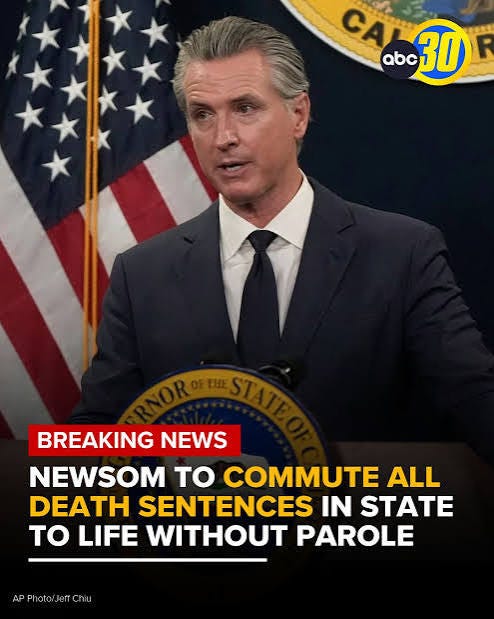
And let’s take a moment to celebrate a post-Election Day victory for fairness, mercy, dignity and justice — California Governor Newsom’s historic decision to commute the sentences of all 548 people on California’s death row.
Here are some of the criminal justice stories you may have missed.
Restoring Rights and Rethinking Punishment
Virginia voters ended a century-old system of felony disenfranchisement.
One of the most significant victories came in Virginia, where voters approved a constitutional amendment automatically restoring voting rights to people convicted of felonies upon their release from incarceration.
Virginia’s felony disenfranchisement laws have deep roots in the state’s racist history. Its 1902 constitutional convention was explicitly designed to disenfranchise Black voters, and a felony conviction could result in the permanent loss of voting rights unless the governor chose to restore them.
On Tuesday, approximately 57% of Virginia voters approved Question 3, removing that discretionary barrier. The amendment also establishes a fundamental right to vote in the state constitution.
Virginia’s decision to end felony disenfranchisement should be celebrated. A criminal conviction should never permanently exclude someone from participating in our democracy.
Massachusetts voters protected marijuana legalization, while Idaho voters preserved the possibility of future reform.
In Massachusetts, approximately 76% of voters rejected Question 8, a proposal that would have ended licensed recreational marijuana sales, reversing a central feature of the state’s 2016 legalization law.
In Idaho, voters rejected a constitutional amendment that would have prevented citizens from using ballot initiatives to legalize marijuana and certain other drugs, leaving that power exclusively with lawmakers.
Houston voters banned no-knock warrants.
In Houston, more than 70% of voters approved Proposition A, which prohibits police officers from requesting or executing no-knock search warrants. Officers must now knock, announce their presence, and wait at least 15 seconds before entering.
No-knock raids gained national attention with the unwarranted shooting death of Breonna Taylor in 2020.
The Houston measure came in the wake of the deadly 2019 Harding Street raid, in which two residents were killed after officers obtained a warrant using fabricated evidence. It’s a welcome limit on unchecked police powers.
Changing Who Holds the Power
Ballot initiatives aren’t the only way voters influence the criminal legal system. Prosecutors, judges, and sheriffs have enormous discretion over who is charged, who goes to prison, and who gets a second chance.
In Maine, Jackie Sartoris was reelected as Cumberland County District Attorney. During her first term, Sartoris expanded restorative justice initiatives and alternatives to prosecution. Her reelection allows those efforts to continue.
In Michigan, Eli Savit, the reform-minded Washtenaw County prosecutor, was elected state attorney general. Savit has pursued changes to prosecution and diversion policies at the county level. His election brings that experience to statewide office.
Michigan voters also reelected Supreme Court Justices Megan Cavanagh and Noah Hood, preserving the composition of a court that has issued consequential rulings limiting extreme sentences. In recent years, the Michigan Supreme Court has expanded constitutional protections against mandatory life-without-parole sentences, including for people who were 19 or 20 years old when they committed their offenses.
In Minnesota, Cedrick Frazier, a former public defender, was elected Hennepin County Attorney, succeeding Mary Moriarty. Frazier’s background as a defense attorney brings a different perspective to an office that makes consequential decisions about charging, diversion, and punishment.
These judicial and prosecutorial elections create terrific opportunities for justice.
But Voters Also Embraced Harsher Punishments
As encouraging as many of these developments are, election night also demonstrated that punitive approaches to criminal justice retain substantial public support.
In Indiana, Louisiana, and Tennessee, voters approved constitutional amendments expanding restrictions on bail or release.
And in Kentucky, voters approved a constitutional amendment restricting executive clemency. It prohibits governors from granting pardons or commuting sentences beginning 60 days before a gubernatorial election and continuing through the fifth Tuesday after the election.
What Election Night Tells Us
Voters embraced reforms that restore rights, limit police power, and create opportunities for more just prosecutions, while elsewhere supporting tougher restrictions on bail and mercy.
These decisions profoundly affect how our criminal legal system function to ensure fairness, justice and accountability. They are well-worth watching.
Thank you for all that you do!
—Jessica